|
|
|
|
| North Downs Way Day Walks | North Downs Way Stage by Stage | Our North Downs Way Photos | Our Other Walks | Walking Places Message Board and Forum | Contact Us |
| DIARY HOME | SEPT | OCT | NOV | DEC | JAN | FEB | MARCH | APRIL | MAY | JUNE | JULY |
|
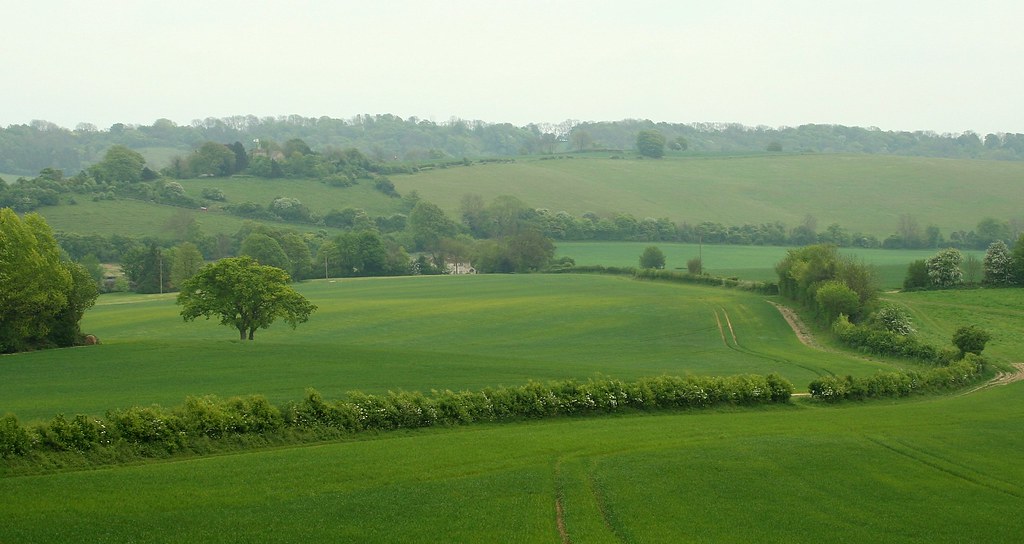
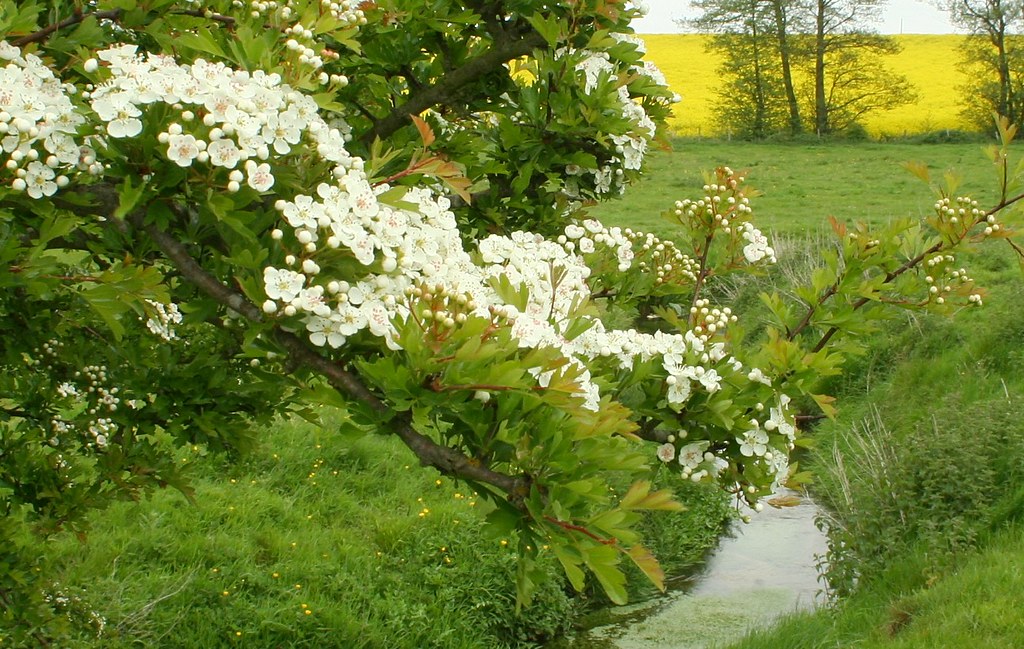
NORTH DOWNS WAY DIARY - MAY May, the first month of summer, a month of enchantment, love and happiness, vibrant scents and vivid colours most notably green, the countryside on and around the North Downs has a glorious, gentle, verdant beauty.
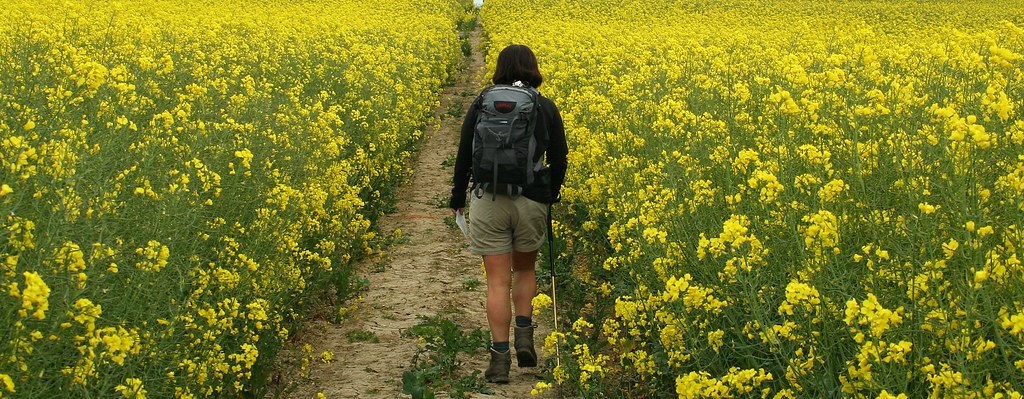
Although with the increasing trend for wide-scale production of Oil Seed Rape it seems as though yellow is now becoming the predominant colour, the crop is grown for margarine production and bio-fuel - increasingly important for future energy needs and to help save the environment but it appears that farms are no longer growing traditional food crops.
May 1st has long been an important part of the annual Calendar. Early Celts only recognised two seasons, winter (Samhain) and summer, celebrating May Day as Beltane. Folk customs exist throughout Europe where a man dressed in green is central to the months festivities symbolising a renewed earth and spirit spreading across the land. Local Kent folklore includes tales of 'The Green Man' and 'Jack In the Green' which together with the Arthurian legend of Gawain and the Green Knight and later medieval tales of Robin Hood are often linked with this custom. The Romans dedicated the day to the Goddess Flora, no, that isn't the reason why there is so much Oil Seed Rape being grown at the moment! Local youths would cut down a tree, usually one belonging to someone else and decorate it with ribbons and flowers. This is the origin of the May Pole, May Queens and Morris Men, whose traditional decorated sticks represent a small portable May Pole, proof that since time began men have always been searching out for the latest compact gadgets. Our month also started in a rather traditional way, no we didn't get dressed up and dance around a maypole, but heavy rain and winds welcomed in the first days of summer. Our walks this month were limited due to having to spend a few weeks working away in the sun, which in some ways was quite fortunate as most of England continued to suffer with very cold wet weather. Slightly out of keeping with recent trends!
The North Downs Way links up with several other less well known routes including The Greensand Way, Vanguard Way, The Downs Link and the Stour Valley Walk, all offering plenty of opportunities to devise a number of walks over varying distances.
Following our day out with other North Downs Way wardens last month we decided to spend some time exploring these other footpaths, deciding that the 51 mile Stour Valley Walk would be achievable over a 3 day Bank Holiday weekend. The walk starts in Lenham, an attractive village in the valley below the Harrietsham to Wye section of The North Downs which we have often walked, and follows the general direction of the River Stour as it winds through south east Kent before reaching it's estuary near Sandwich. The (torrential) rain, however, limited our walking to two days and we only walked the first 30 miles of the trail finishing at Canterbury.
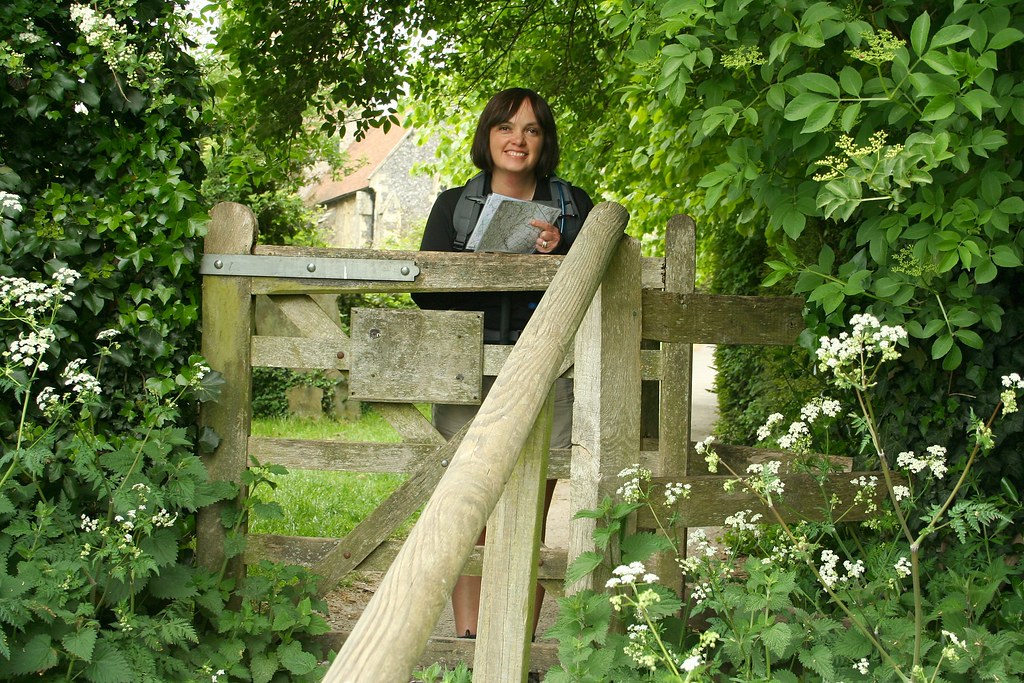
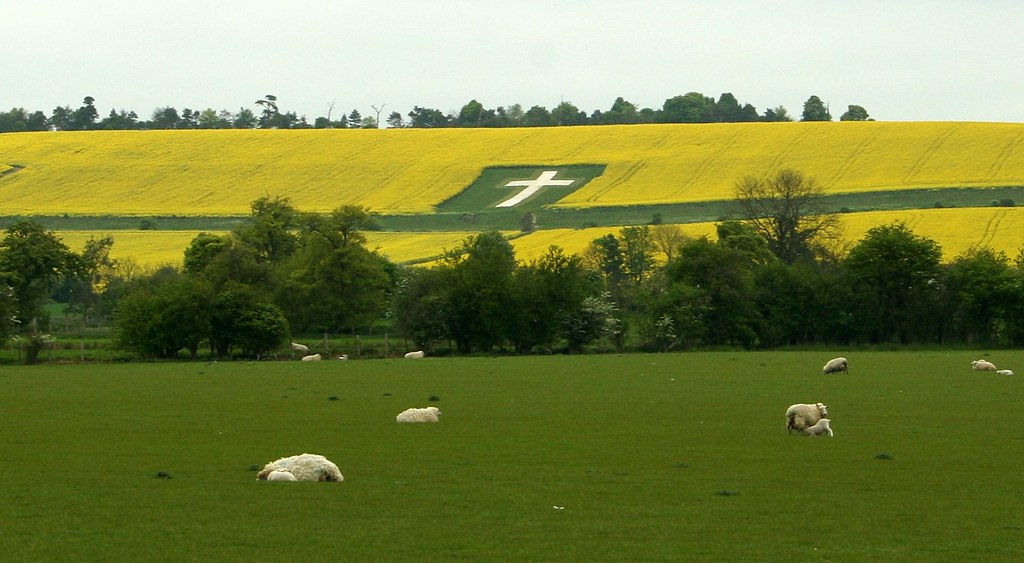
It was quite a dramatic change to be walking besides rivers, you don't get many on top of the North Downs ridge, and through attractive villages. The route of the North Downs Way is visible in certain places, such as here outside Lenham where it contours the hill just below the memorial cross before heading up to the ridge and onto Wye. Waymarking along the Stour Valley Walk is very good and although some of the stiles are not well maintained the trail is very easy to follow, providing quite a variety of interesting landscapes - not all flat lowland walking which you might expect from following the course of a river. The 7 mile section between Wye and the Chilham Downs surprised us with the extent of unbroken rolling hills and downland.
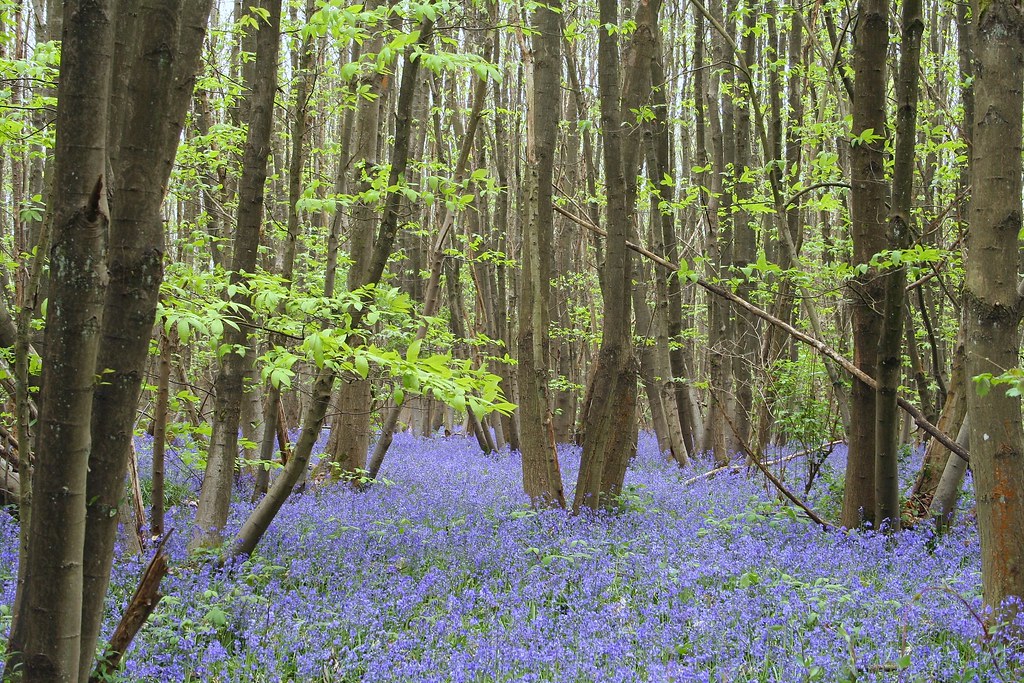
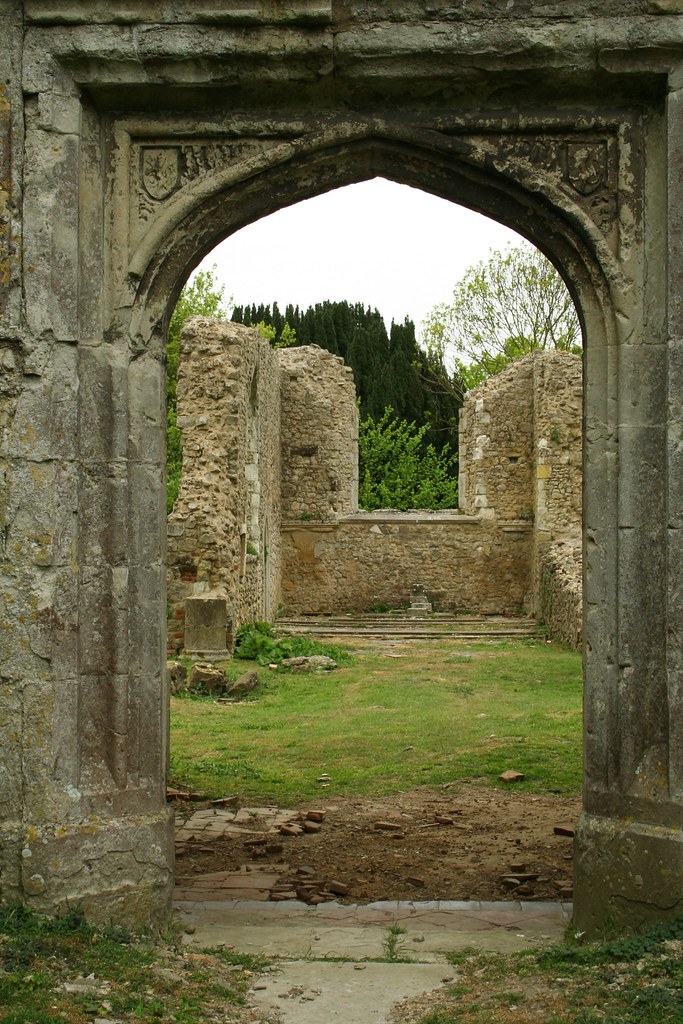
We were walking through 'The Darling Buds of May' country, the author H.E. Bates lived at Little Chart, on the route of the Stour Valley Walk, and although the family portrayed in the novels was believed to have lived in Wiltshire and only in Kent on holiday, the TV series was filmed around this area of Kent. It is as Pop Larkin would say ' Perfick'. The mysteriously named Little Pipers Wood was still dazzling with bluebells covering nearly every inch of open ground, cricket pitches were being prepared on village greens and the ruins of St. Mary's Church near Little Chart provided a nice place to stop and reflect on the past. This medieval church is so isolated yet, it was completely destroyed during the Second World War by a VI rocket. Unfortunately it may have been in the middle of nowhere but it was also in the middle of 'bomb alley' and took took a direct hit from one of the many missiles that fell short of it's intended target.
With the sound of cuckoo's in the nearby woods we carefully crossed Hothfield Common, a conservation area of special scientific interest with acid grassland and the last remaining peat bogs in Kent, you don't really expect to find a heather moorland whilst out walking so close to London, before heading into Ashford and the end of the first day's walking. Unfortunately on the outskirts of Ashford we opted to follow the previously excellent way-marking rather than the route indicated on the ordnance survey map and headed off into an Industrial site rather than taking the much more attractive cycle path along the river towards the station. Sometimes you forget the games people play in towns and the sign had been turned around to point the wrong way! After a few flat miles into Wye the second day picked up a lot, with miles of wonderful walking up and down rolling green hills. At Chilham it is possible to head down into the Stour Valley and join the North Downs Way which follows a slightly different route between Wye and Canterbury making it possible to devise a few circular walks. On this occasion we wanted to continue on the Stour Valley Walk which, unfortunately culminates with a few miles of tarmac paths and minor roads before arriving in the City centre. Despite the drudgery of these final few miles we did get an insight on what life is like for migrant farm workers, passing an encampment of caravans on Howfield Farm used to house fruit pickers who no doubt have the cost of staying in the caravans deducted from the minimal wage they receive, at least they have a view of Canterbury Cathedral over the apple orchards.
|