|
|
|
|
| North Downs Way Day Walks | North Downs Way Stage by Stage | Our North Downs Way Photos | Our Other Walks | Walking Places Message Board and Forum | Contact Us |
| DIARY HOME | SEPT | OCT | NOV | DEC | JAN | FEB | MARCH | APRIL | MAY | JUNE | JULY |
|
NORTH DOWNS WAY DIARY - APRIL You may have noticed the page layout has changed - this is to make printing pages easier, adjust print page set -up to landscape with top/bottom margins of 10mm you should then be able to print all of the content. Some images can now be viewed in a larger size by clicking on them - then use the back icon on your browser to return to this page. April - a month where everything in the countryside seems to be changing rapidly as we head towards summer..
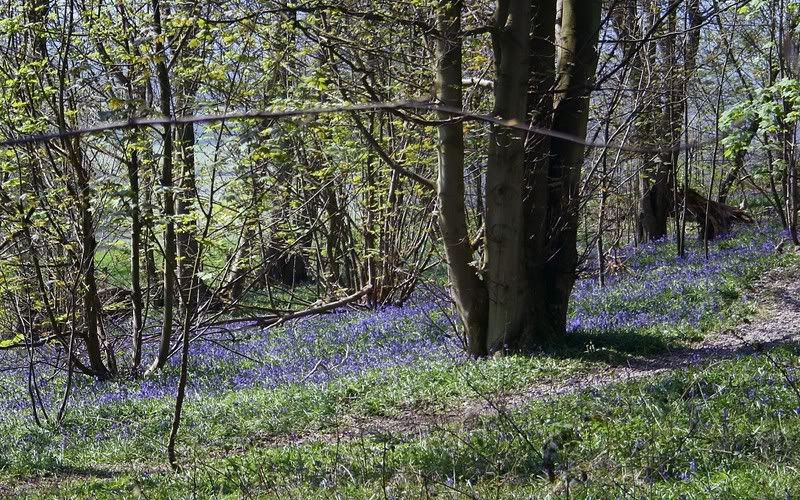
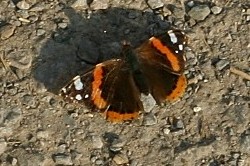
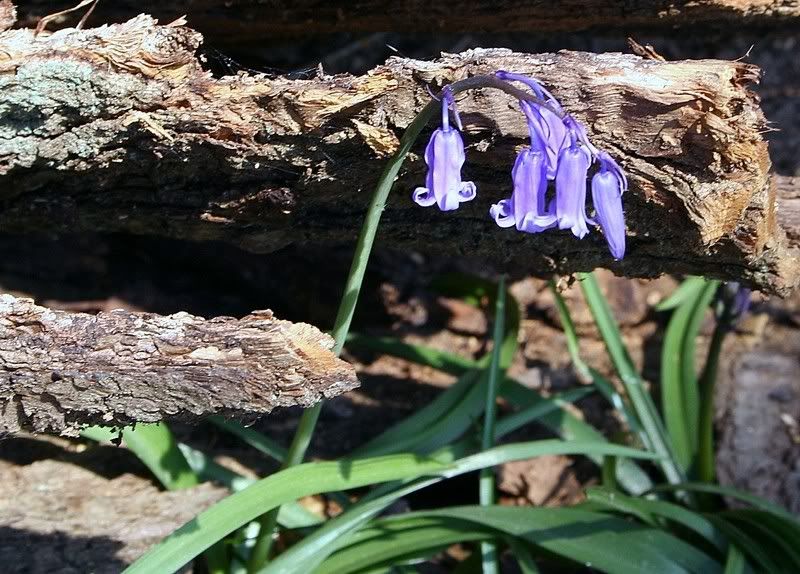
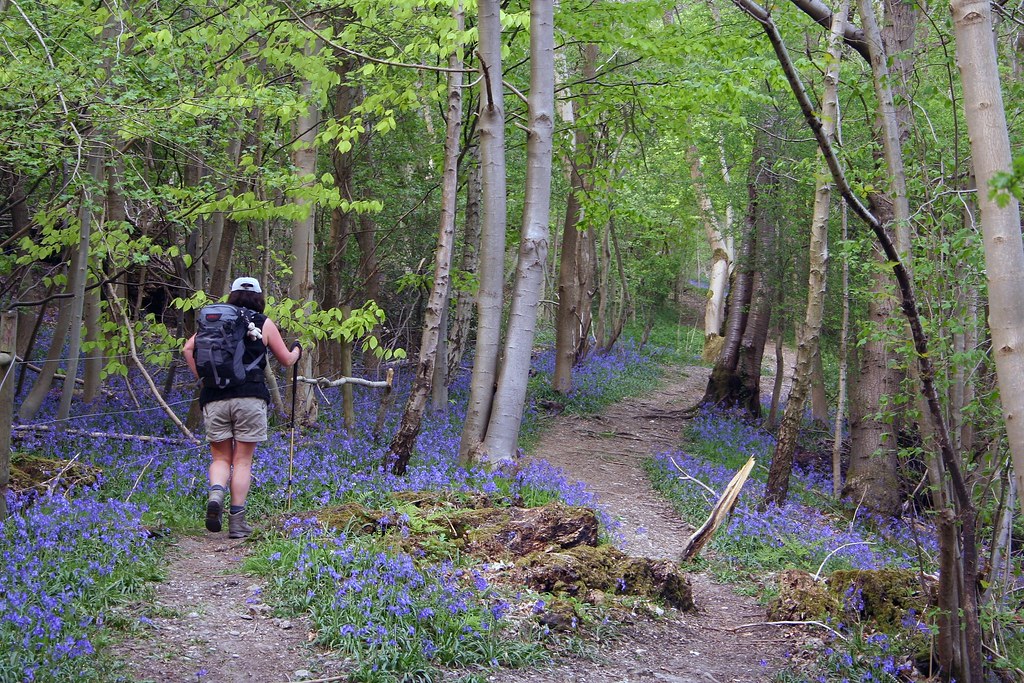
Buds and leaves are starting to unfurl in the sun giving trees a touch of green; bright yellow Brimstone and Red Admiral butterflies are busy flying around searching out blossom; ground below the hedgerows is casting off its muddy, wintry brown coat with a show of spring flowers including calendines, stitchworts, primroses and bluebells, the little blue flowers of speedwell are opening up in the grassland and woodland clearings are awash with bright white anemone's and green leaves of ransomes - wild garlic. Ahead of us we have the prospect of ancient woods full of bluebells, and the scent of hawthorn and apple blossom along hedgerows, the arrival to these shores of the first cuckoo and maybe some swallows after their migratory flights. Not forgetting April Fool's Day, Easter and St. Georges Day. April fool No one is really sure why we play pranks and tricks on each other on April 1st however it is widely thought to date back to the 18th century when most of Europe adopted the new Gregorian Calendar, before then March was the year end culminating in New Year festivities on April 1st, and the taxman visiting a week later to take his share of annual earnings, New Years Day changed, the tax year didn't! As it was only the rich and church leaders that had access to or knowledge of dates and calendars some of the people forgot, it appears that the French were the most forgetful, and continued going around to their friends with gifts for the New Year only to be ridiculed and made to look like a fool!
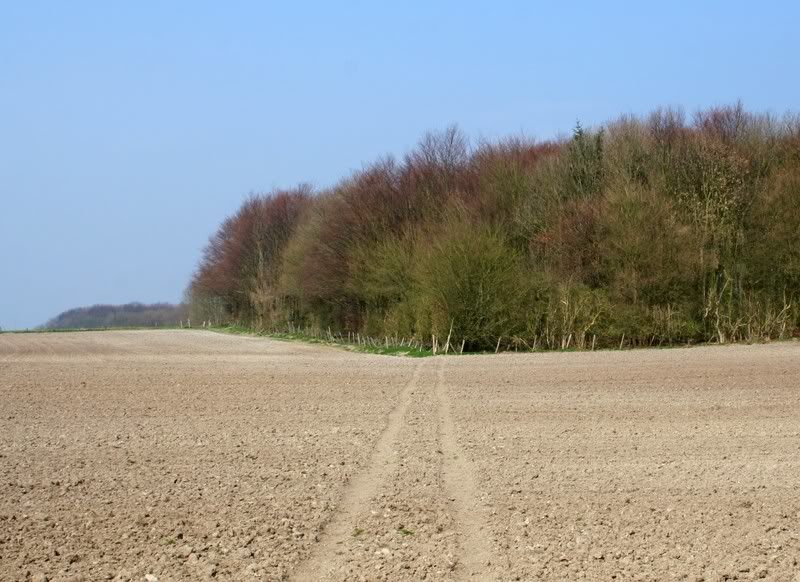
Our April Fool involved getting lost at the start of a 23 mile hike, still training to do a marathon and as we were feeling like a change of scenery we headed east along the North Downs Way to Wye intending to then walk westwards to Harrietsham before turning back to Wye. Off we went following the way-marks, all pointing out the route, so no need to waste time by consulting the map. Hey Lizzie isn't this the place where you struggled to climb over a stile on the way to Canterbury??? - It slowly, logically, dawned on us - we had forgotten that the North Downs Way splits just outside Wye to give two possible routes to Dover and, like those drivers you read about spending days going around the M25, we were heading for a very long circular trip. Thankfully we noticed the mistake and backtracked to the point where the path splits rejoining the correct path heading back west. Unfortunately we soon discovered one of the minor inconveniences of walking in springtime - ploughed fields. Luckily the ground was really dry, almost like sand and we had little problem walking along the tyre tracks that will soon be cutting a line through new crops, the only hazard being an allergic reaction which Lizzie always gets on her legs when walking across freshly ploughed ground probably due to the fertilizers and lime being used on the fields.
Easter
Weather-wise, Easter is always a little unpredictable. You look forward to 4 days holiday in order to celebrate the festival of Eostre, the mother goddess of fertility, who happened to be represented by a rabbit, our Easter bunny, and to exchange eggs (something which Kev forgot about this year!), the symbol of rebirth, painted or if you were rich, decorated with gold leaf, all signifying a ritual celebration of new life and new beginnings, only to be let down by the weather. Will it be cold and snowy, wet and miserable, nice and sunny or a bit of everything thrown in together - sometimes within the same 24 hours? This year we were lucky. Warm weather leading up to Easter continued over the weekend. In fact with temperatures reaching 20C it felt more like summer. A great time to be out walking in the country so we decided to take advantage and see whether we could walk the distance of a marathon - 26 plus miles. The air was still and warm even as we set off at 8.13am and after 3 miles we were unzipping the legs off our convertible trousers and walking in shorts and t - shirts somewhat surprised to see others passing by in big heavy coats, taking the dog for a walk obviously doesn't warm you up very much.
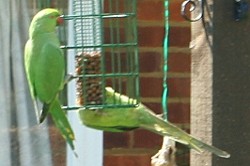
It seems as though we were the only ones appreciating the warmth, apart from the parakeets, two of them were helping themselves to nuts from a feeder outside a house we passed before flying off into nearby trees. Sadly there have been calls recently to cull them because their growing numbers may be threatening other birds in the area. This would be a great pity because they have become something to keep an eye out for as we walk along the downs and certainly add a splash of dramatic colour. To remove them from the skies would be like the end of Concorde, for some reason even though it was environmentally unsound there was a reassurance to be had, you could even set your watch when you heard its engines roar past and looked up to see its elegant graceful shape in the sky. The heat soon had an effect on our marathon attempt - both of us ran out of water after about 20 miles at which point the feet started to complain about being subjected to more miles over a baked hard surface, the mind was still willing though. With around 4 miles left we stopped briefly to watch a young male Roe deer, so close to us before it bounded off across the path. By now we weren't moving so gracefully. We arrived back at the car park having walked just over 23 miles and joined a throng of people walking dogs or wheeling pushchairs around for a final painful 3 miles across Gatton Park fuelled by jelly beans. From the look on the faces of some of those just getting out of their car and walking a few miles into the park we must have looked as weary as we felt walking the final mile but if you happened to be one of them.................. the couple hobbling past you had just completed a marathon. Of course, despite having walked over 26 miles Kev, was still on a mission to try and overtake everyone and just about succeeding, apart from a little boy on a bike who was proudly trying to accomplish his first wheel skids. 9 hours later and we had done it, Lizzie promises that it will be the last time, from now on we stick to more reasonable distances - under 20 miles - which is just what we did the next day. (Though she is tempted by the thought of completing 50k/30 miles ........ one day).
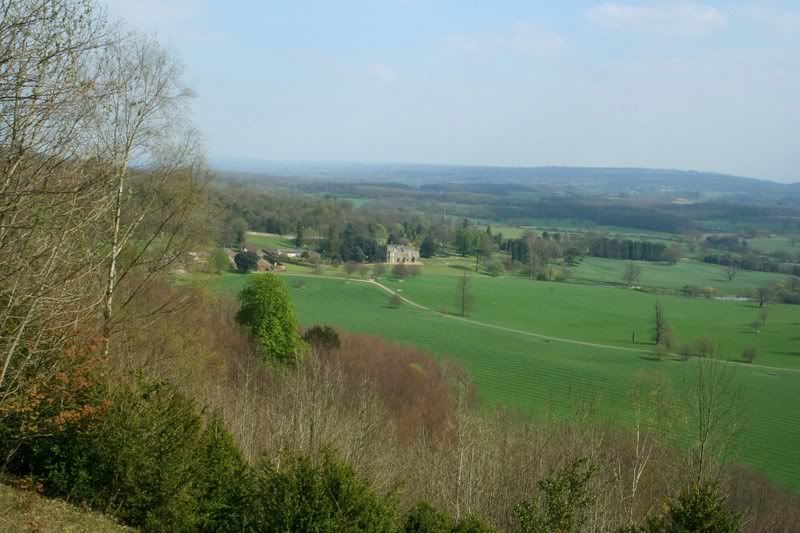
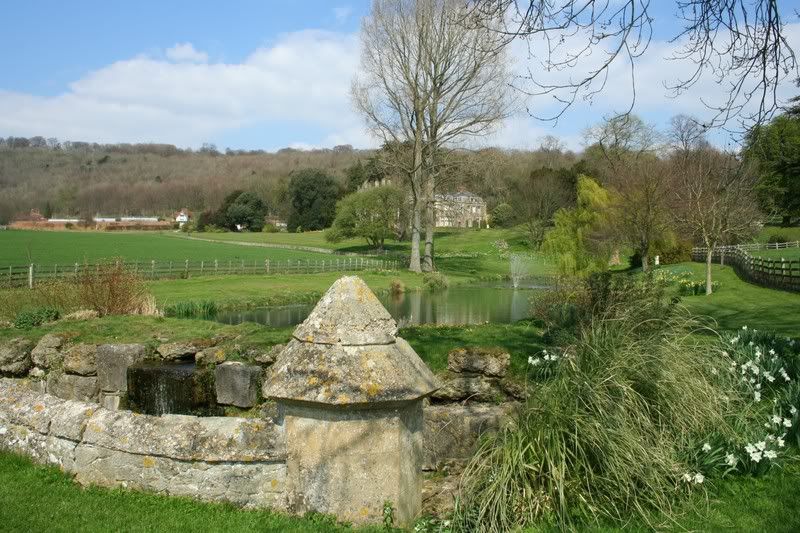
We have walked along the North Downs Way around Titsey many times without knowing what was hidden behind the wooded plantation, now it was time to find out, well, it was either that, or stay in for another Easter tradition watching The Great Escape on TV. Titsey Place is one of the largest country estates in Surrey but rarely opens to the public so we took the opportunity to have a relaxing post marathon day wandering around the gardens and through the woods that lie below the part of the North Downs Way we regularly walk along. Our first impression was how could such a large estate be so well hidden from the paths above. The existing house was built in the 18th century but there has been a manor house here since the 16th century and long before that this was the site of a roman villa. Wandering around the extensive landscape gardens with great views south across the weald and with the shelter of the downs to the north it is easy to see why people through the ages would have wanted to establish an estate here and it is certainly worth taking a detour off the North Downs Way through the Titsey plantation to a viewpoint above the house for some great views, or even head down to the house and gardens on an open day. Return of the Swallow Mid April normally sees the arrival of two summer visitors, the Swallow and the Cuckoo. Traditionally both arrive around the 14th, Cuckoo Fairs are still held in some parts of the country to mark the occasion. We saw our first Swallows this year on the 15th while walking along the South Downs Way. Just as we were admiring the sea glistening in the sun and remarking on how much of the chalk cliff had been eroded since we were here last Autumn a pair flashed by swooping over the Seven Sisters and heading inland, or were they swifts? It was difficult to tell they darted past so quickly. Nowadays it is funny to think of some old folklores and beliefs, the strange reappearance of many animals in spring led people to believe that Swallows and Swifts spent the winter buried in the mud at the bottom of ponds. Of course we now know better and they are all actually waiting to take advantage of the cheaper cross-channel ferry tickets once the kids have gone back to school after the Easter holidays. The natural world appears to be undergoing it's transformation from spring to summer earlier each year. Difficult to tell whether this is just the mind playing tricks but it seems to be supported by the facts and is not surprising that April 2007 is already being talked about as the warmest ever, instead of the usual showers we have had temperatures higher than those on the Mediterranean. One of the prices to pay, no doubt, will be an earlier than ever hosepipe ban and water restrictions.
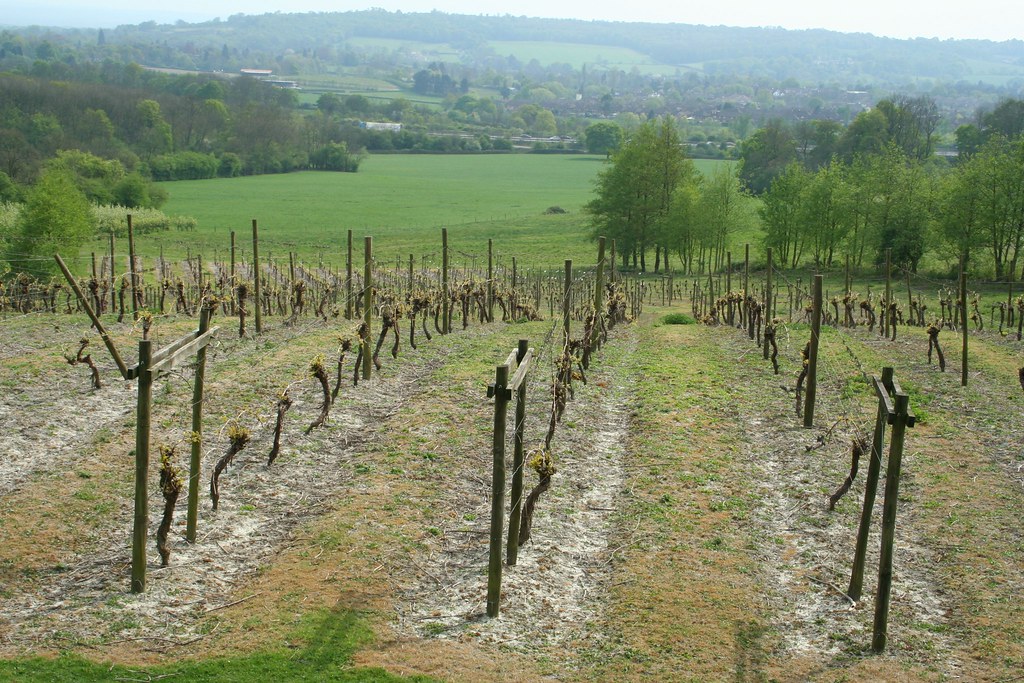
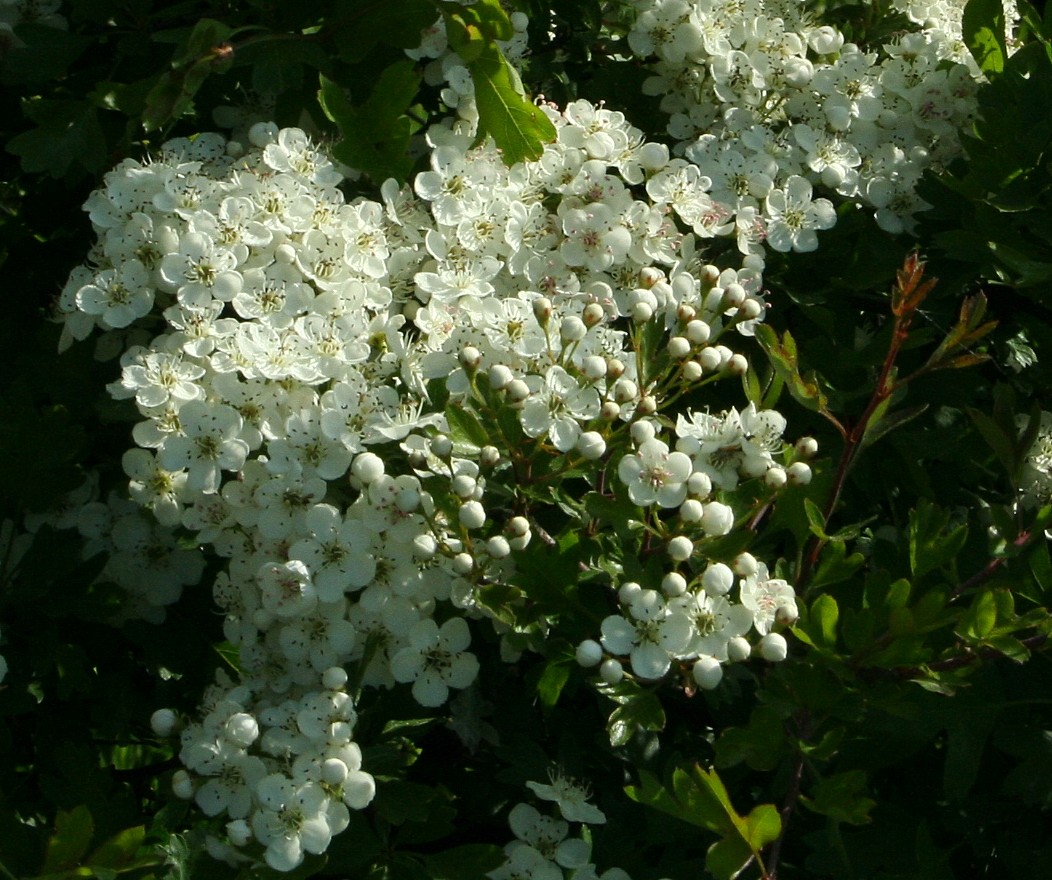
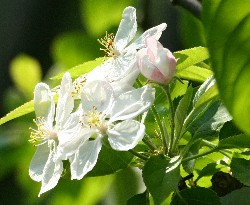
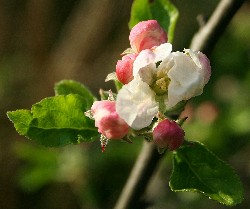
The vines at Godstone, that were full of ripening grapes way back in early October, are now showing signs of their first leaves and buds. Hawthorn, known as May Flower because it tends to flower first during May is already full of blossom, an indication that the weather has been milder than usual. Apple blossom.
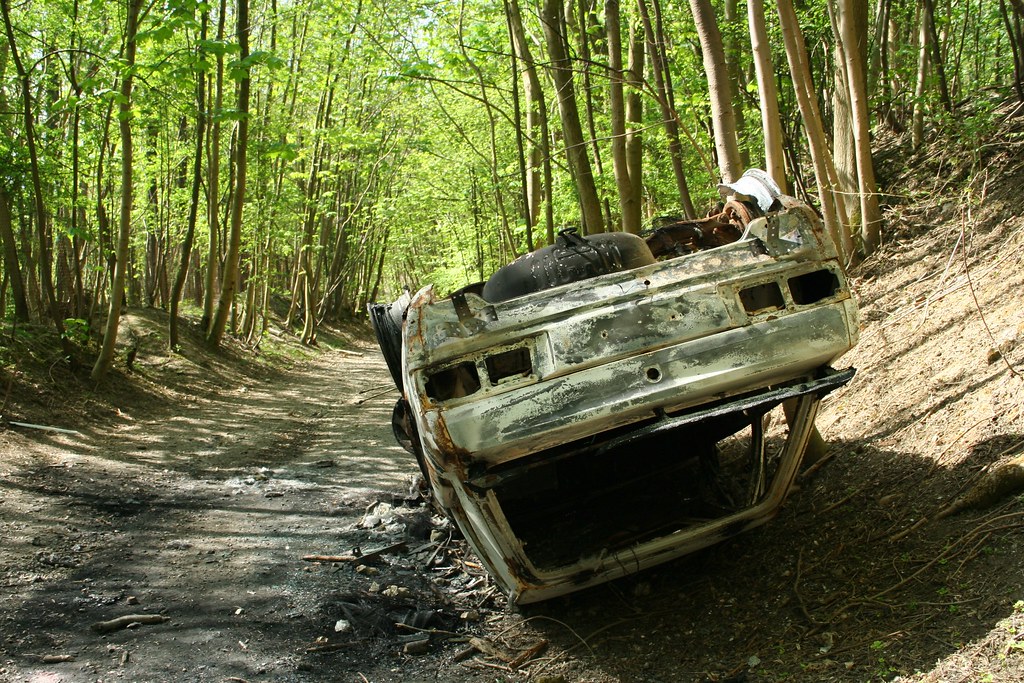
It really has been one of the best months to be out in the countryside, every day seems to bring something new. Apples, which are a large crop in Kent's 'Garden of England' are bursting into flower, which mixed with the bluebells, wild garlic and hawthorn creates a subtle fresh spring like fragrance wafting across the warm breeze, sadly it can be hard to pick out in places above the fumes of the nearby roads and motorways. Seeing all of this new life makes you realise just how important the region was in the past for supplying most of our food, as we make the weekly trip to the nearest supermarket to buy things that have been shipped in from various parts of the world rather than grown around the corner. Most of this is now forgotten or not cherished like St. George the patron saint of England. Farmers are subsidised to leave fields empty or grow Rape Seed Oil, the bright yellow plant that appears to be taking over the countryside. In some ways this change is welcome as it has seen a turn towards more environmentally friendly farming techniques resulting in the reappearance of native wildlife and even farmers encouraging walkers onto their land in some cases with new open access agreements. St George who was adopted as England's patron saint by Richard 1 during the crusades still remains largely forgotten and even his origins and the reason why he became our patron saint are vague. April 23rd remains uncelebrated, even though by coincidence the date also happens to be the birthday of England's greatest writers, Shakespeare. All this leaves England as one of the few, if not only European countries, not to have a public day off to celebrate their saints day or openly acknowledge a sense of national identity. Amidst the wonders of the warmest April on record, as a glorious spring turned into summer, the romantic image of our countryside was broken by the harsh reality of how some inconsiderate people treat it nowadays and you have to ask whether many people would notice or even care if our countryside vanished under motorways, housing estates and shopping malls.
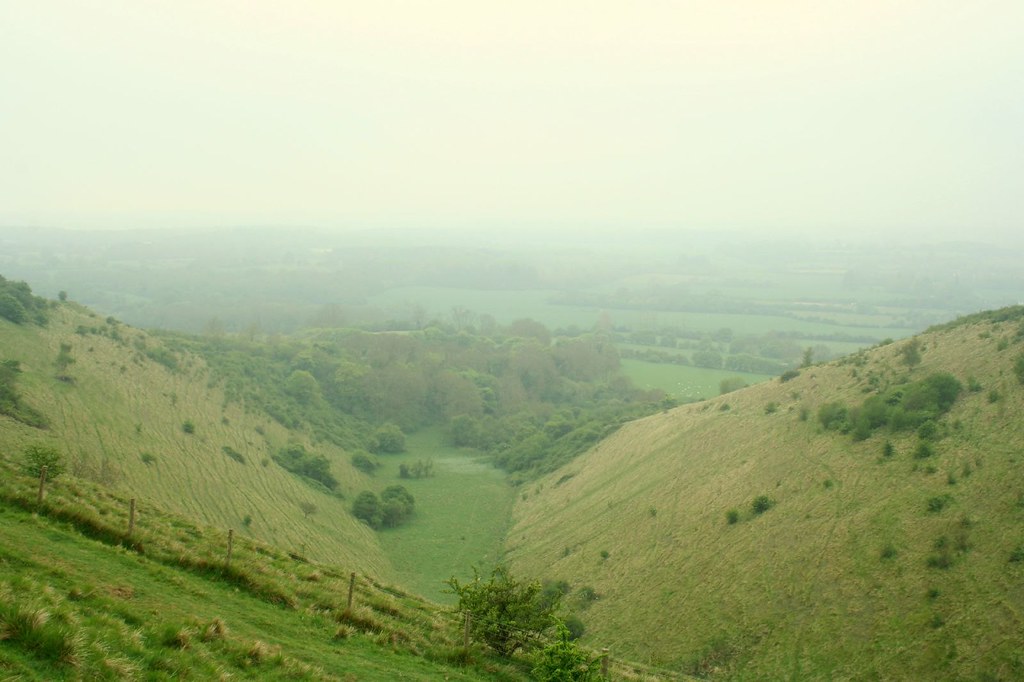
A situation further highlighted when we joined a North Downs Way Wardens day walk, a day after one of the largest earth tremors hit South Kent causing damage to buildings, leaving others without power, we were waiting at Wye railway station and read that Imperial College plans to transform acres of the land it owns around the downs into a science and technology park, turning thousands of acres into housing in order to fund the development and if they succeed, destroying, for ever, one of the most scenic views in Kent that has existed since the glaciers melted away leaving the fertile soil in the valley below that helped make Kent the Garden of England.
Luckily the village has fought a vigorous and successful campaign and defeated the initial large scale plans but who knows how long they will be able to keep smaller developments in check as the colour of money is more attractive to some than green fields.
|